
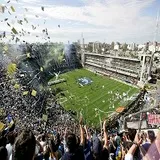
Barras bravas are organized supporters from Argentina. They provide fanatical support to their clubs during tournaments. They usually provoke violence against a rival fan and often times the police. These groups of supporters are similar to the Ultras of Italy, Hooligan Firms of the United Kingdom, and Torcidas Organizadas from Brazil.
Origin of Barras Bravas
The first irregular group to appear in a football match was in 1920. They were supporters of Argentine and stood out due to their passionate response from the crowd. These groups were called barras by local media. Barras is a slang term for gangs, but their actions are not necessarily associated with crime. They are just an informal group of people who meet due to their like of common activities.The actions of Barras bravas are limited to their homecourt only since they cannot go to other cities often. Creating violence is not the group’s objective. However, due to the frustration caused by bad results, their way of supporting their team is to intimidate rival players and referees with insults. They would also throw objects to the pitch and occasionally assault the players and officials. Because of their loyalty, a few newspapers called these groups as barra brava, which means fierce in Spanish.
How Barras Brava Show their Support
Barras brava shows their support to their team by carrying flags, banners, umbrellas, and uses musical instruments. The colors of the flags, banners, and umbrellas are the team’s colors. The musical instruments are used to accompany their chants. These groups are the ones that coordinate and start the chants. They are usually situated at the center of the terrace and wave their banners or flags.It is known that the center part of the terrace is where these avid supporters stay. Hence, it is often left unoccupied by the crowd and left it empty for the barras brava, out of respect for these supporters.
Previously, these groups are not that big. However, as the years passed, the group has changed and become bigger. They even have their own club, with their own chairman. They are also funded by the club leadership, giving a percentage of the profits earned. If non-football activities arise, the club will also hire representatives of the barras bravas as security guards to look after the facilities.