
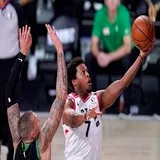
In basketball, a Charge is an offensive foul that occurs when an offensive player collides with a defensive player who has established a stationary position. To draw a charge, the defender must be completely still before the offensive player makes contact.
When a charge is called, the offensive player is assessed a personal foul and loses possession of the ball, resulting in a turnover. If the offensive player was in the act of shooting when the charge occurred, the basket does not count, even if the shot goes in.
Charge calls can be difficult for referees to make because they happen so quickly.
The referee must determine in a split second whether the defender was truly stationary and if the offensive player was the one who initiated the contact. If the defender was moving or leaning into the offensive player, it should be called a blocking foul instead.
In the National Basketball Association and other professional leagues, there are additional rules about charges.
The defender must be outside of the restricted area (the semicircle beneath the basket) to draw a charge. They also need to have their torso directly in front of the offensive player, not turned to the side.
The charging rule has evolved over time to promote player safety and fair play. In 1997, the NBA introduced the "No Charge Zone" (later renamed the Restricted Area) to prevent defenders from camping out directly beneath the basket.
This forces defenders to establish a position outside the semicircle if they want to draw a charge.
Some players have a reputation for being especially good at drawing charges. Nick Collison, a former power forward for the Oklahoma City Thunder, was known as one of the best charge-takers in the NBA. Other notable charge-drawers include Kyle Lowry, DeMarcus Cousins, and Monta Ellis.
Drawing a charge requires a combination of good positioning, quick thinking, and a willingness to sacrifice your body. When executed properly, it can be a momentum-changing play that swings possession back to the defensive team.
However, attempting to draw a charge also comes with risks. If the referee determines that the defender was not stationary or was in the restricted area, they will be called for a blocking foul, giving the offensive team free throws and possibly putting the defender in foul trouble.
Coaches often teach young players the importance of taking charge as part of a strong team defense. It requires communication, anticipation, and a selfless attitude. While it may not be as glamorous as a blocked shot or a steal, drawing a charge can be just as impactful in determining the outcome of a game.