
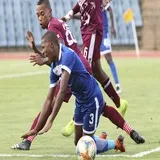
Diving in association football is a movement which is done in an attempt to pull off an unfair advantage. It is done by falling into the ground, which sometimes comes with the possibility if feigning an injury. Players do this to make it look like a foul has been made so that they can receive penalty or free kicks or so that their opponents will receive either a red or yellow card. In addition, the decision to call falling into the ground as a dive is often very subjective and controversial, making it a favorite topic in many football discussions.
The other name for diving in FIFA terminology is simulation. In the United States they call it “flopping” while Germany termed it as, “Schwalbe.”
Recognizing Dives
Dives are often hard to recognize because of its subjectivity. Despite this, a research had shared that there are four recognizable traits that will help officials see if a player is diving or not.It is said that a player is diving when there is a separation in time between the simulation and the impact. Another recognizable trait is when there is a ballistic non-community. This means that the player who is diving moves far from where he or she should land compared to the amount of momentum given by the tackle.
Furthermore, the inconsistency can also help officials recognize diving. This may include nursing a body part that actually was not hurt or did not even make contact with the other player or the ground. Another example includes a player holding his face in pain even when the contact made was to the chest.
Last but not the least is looking for the, “archer’s bow” pose. This pose is considered a sign of stimulation since it is opposite to normal reflex mechanisms that the physical body does to protect itself from a fall. This pose includes tilting the head back, lifting both feet away from the ground to the rear by bending the legs at the knee and raising the arms and thrusting the chest forward.