

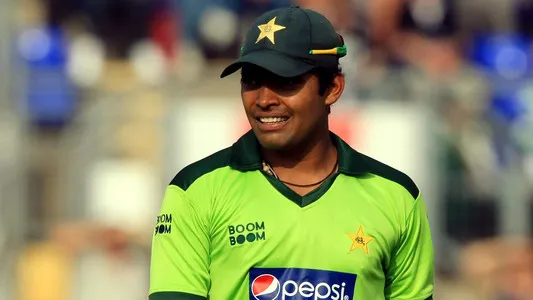
The Pakistan Cricket Board (PCB)’s disciplinary committee handed down the ban on two counts to the 29-year-old right-hand batsman, who burst on to the international scene in 2009 with a Test century on debut.
Umar plead guilty after withdrawing a challenge last month, thus the three-year ban is unprecedented in its length given the crime and plea, but it is understood he was dealt with harshly due to a lack of remorse.
Recent cases of a similar offence include Bangladesh all-rounder Shakib Al-Hasan who was banned for two years, with one of those years suspended.
In Pakistan, Mohammad Irfan received a six-month suspension, while Mohammed Nawaz was banned for two months.
The PCB’s anti-corruption and security director Asif Mahmood said: “The PCB doesn’t take any pleasure in seeing a promising international cricketer being declared ineligible for three years on corruption charges, but this is once again a timely reminder to all who think they can get away by breaching the anti-corruption code.
“The anti-corruption unit regularly holds education seminars and refresher courses at all levels to remind all professional cricketers of their obligations and responsibilities. And even then, if some cricketers decide to take the Code into their own hands, this is how things will pan out.”
“I request all professional cricketers to stay away from the menace of corruption and immediately inform relevant authorities as soon as they are approached.”
Umar’s ban is effective from February 20, although he has not represented his country since two T20 Internationals against Sri Lanka in Lahore last year.
Corruption is treated seriously in Pakistan after ex-captain Salim Malik was banned for life while six others including Wasim Akram and Waqar Younis received fines for fixing in 2000.
In 2010, Salman Butt, Mohammad Asif and Mohammad Amir were all banned for five years for spot-fixing during a tour of England.